Let us figure it out without the marketing: what the percentages on the tube actually mean, how a primary cream differs from a secondary gel, which active ingredients are responsible for what, and how to match a product to your procedure and skin type.
A numbing agent in beauty work is not about "the stronger the better". It is about the right match: the type of procedure, intact or broken skin, the client's sensitivity, contraindications. Below is a guide that will help you choose a product consciously, and at the end there is a short answer to the most common questions.
1. Primary or secondary
This is the first thing to decide. The type depends not on the brand, but on which skin the product is applied to and when.
| Primary | Secondary | |
|---|---|---|
| When | before the procedure, on intact skin | during the procedure, on already broken skin |
| Form | usually a cream | usually a gel or liquid |
| How to apply | a thick layer under an occlusive film | thinly, without film, refreshed as needed |
| Onset time | 15-30 minutes | 2-5 minutes |
2. The main myth: what the percentages in the name mean
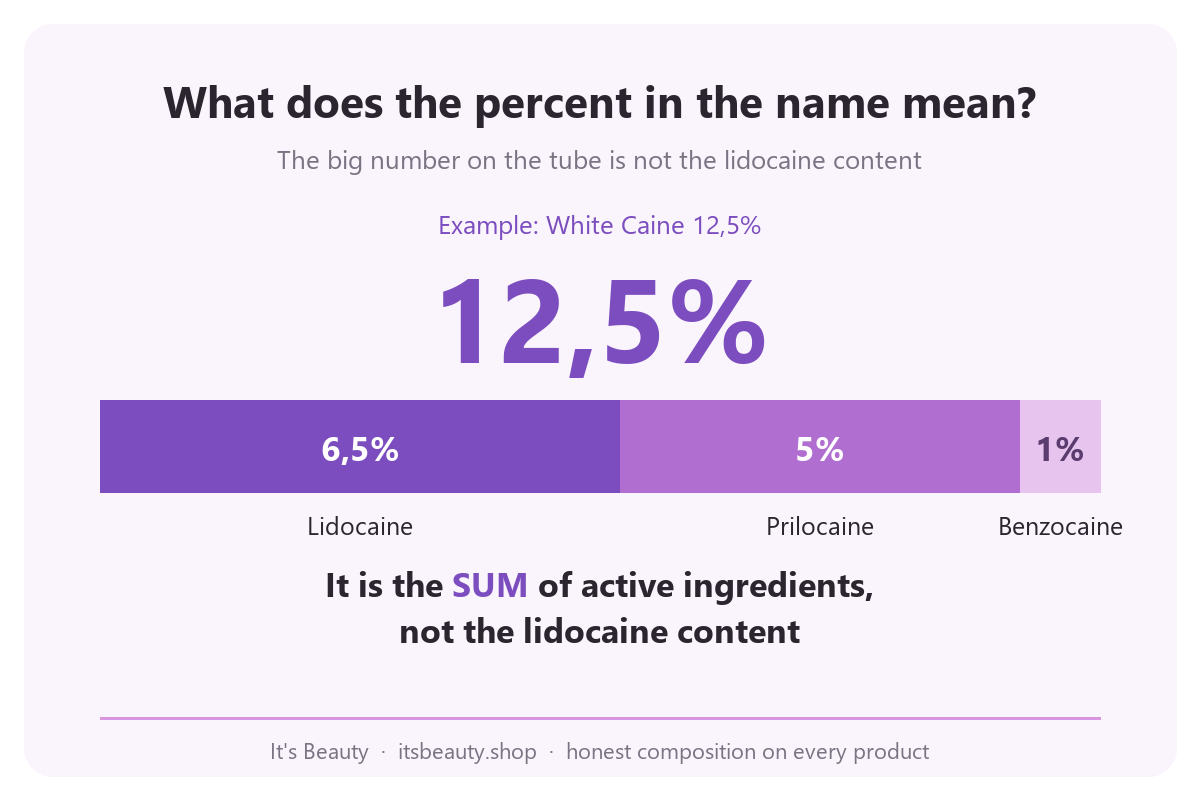
"10.95%", "12.5%", "40%" on the tube are the most common source of confusion. Let us break it down honestly:
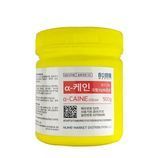
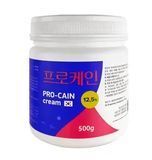
- The percentage is most often the SUM of the active ingredients, not the lidocaine content. For example, in A-CAINE "10.95%" it is 5.95% lidocaine + 5% prilocaine. In PRO-CAINE 12.5%, on the contrary, it is pure lidocaine without additives.
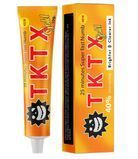
- In TKTX, "40" and "75" are a series marking (a brand strength label), not the real lidocaine percentage. You should not rely on this number alone.
3. Active ingredients and what they do
| Ingredient | Role |
|---|---|
| Lidocaine | the main anesthetic, quickly reduces sensitivity |
| Prilocaine | works in synergy with lidocaine, prolongs and deepens the effect |
| Benzocaine | a surface anesthetic, a gentle quick start |
| Tetracaine | powerful, prolongs the action (often in secondary gels) |
| Epinephrine (adrenaline) | constricts the vessels: less swelling and bleeding, the effect lasts longer |
Combined formulas (lidocaine + prilocaine + benzocaine) act faster and more broadly than mono-lidocaine of the same total concentration. Mono-lidocaine, as in PRO-CAINE or J-CAINE, is chosen deliberately when the client does not tolerate prilocaine.
4. How to choose by procedure
Tattoo and microblading
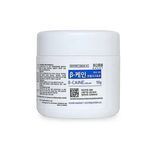
A primary cream under film before the session (B-CAINE, F&E Tattooist) plus a secondary gel to maintain numbing on open skin (TKTX Gel).
Permanent makeup of brows and lips
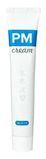
Delicate areas: thick creams that do not spread (PM Cream), and care near the eyes. For lips, formulas with pronounced numbing are suitable.
Mesotherapy, laser, hair removal
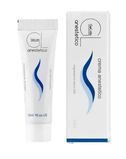
Universal balanced creams, for example A-CAINE or GeLido.
5. If there is a lidocaine allergy
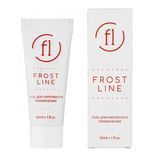
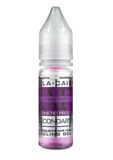
This is no reason to give up numbing. There are lidocaine-free formulas: Frost Line based on the Anestomine complex and Amor Fati Lila Caine. Before the first application, always do an allergy test.
6. Safety and contraindications
- an allergy test before the first application is mandatory;
- do not apply to damaged skin, wounds or inflammation (for primary agents);
- be careful with epinephrine formulas in case of cardiovascular diseases;
- avoid contact with the eyes and mucous membranes;
- pregnancy and breastfeeding are better discussed separately;
- all products are for professional external use only.
7. Why it is worth looking at the documents
A good supplier does not hide the composition behind a pretty number. In the It's Beauty catalog, an honest breakdown of the active ingredients is given for many items, and there are laboratory test reports. This is both about the client's safety and about your reputation as a master.
Choose a numbing agent for your procedure
Over 40 products in stock: primary, secondary, universal, lidocaine-free. With an honest composition and documents.
Go to the numbing agents catalogFrequently asked questions
Which numbing agent is best for tattoo and permanent makeup?
What does the percentage in the name mean (10%, 12.5%, 40%)?
How does a primary numbing agent differ from a secondary one?
How long should you wait for the numbing agent to take effect?
What to do if the client has a lidocaine allergy?
Why is there epinephrine (adrenaline) in the composition?
Are numbing agents safe for brows and lips?
- Compositions and types of products are given according to manufacturers' documents and data from official distributors (laboratory test reports, INCI).
- The material is informational in nature and does not replace a consultation with a specialist. All products are for professional external use.