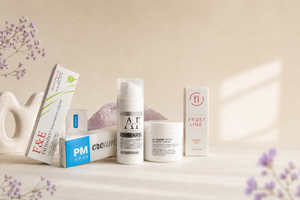
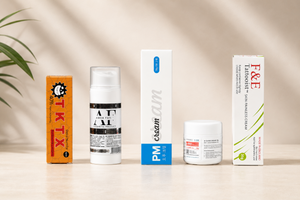
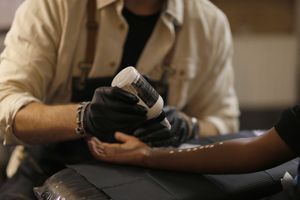
Short answer: apply numbing cream to clean, dry skin in a thick layer and always cover it with film, hold it for 10 to 60 minutes depending on the product, then wipe off the residue and start work. Secondary gel goes on later, during the procedure, straight onto broken skin. Below we walk through the steps, real hold times by product, and the mistakes that stop numbing cream from working.
How to apply numbing cream
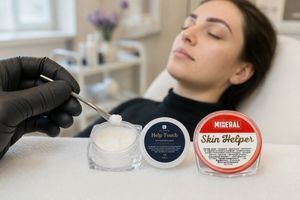
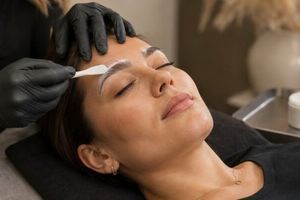
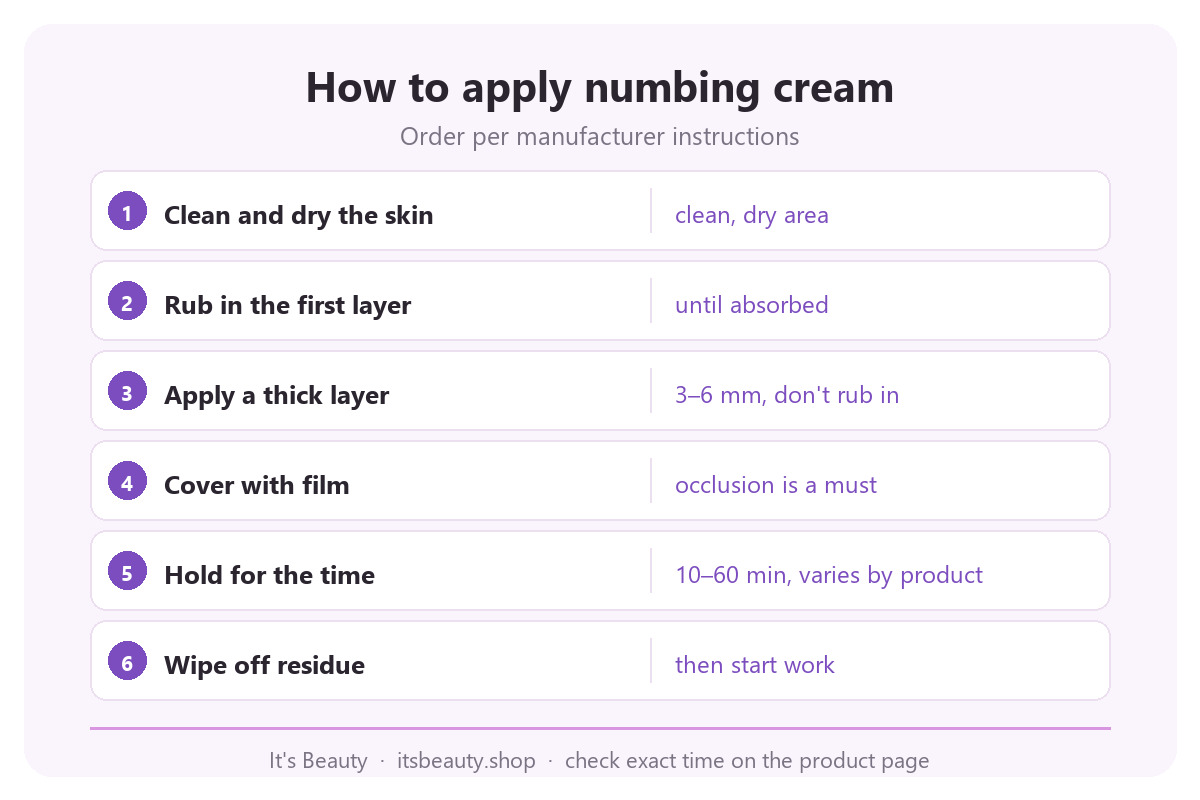
The order of applying numbing cream is nearly the same across most primary products, only the hold time and layer thickness differ. The general scheme, per manufacturer instructions:
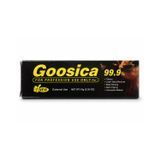
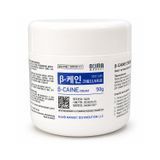
- Clean and dry the skin. A-CAINE and B-CAINE call for thoroughly washing and drying the area, Depain also specifies disinfecting it.
- Apply the first layer and rub it in until absorbed. This is how A-CAINE, B-CAINE, PM Cream and F&E are used.
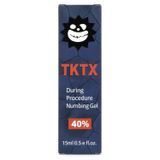
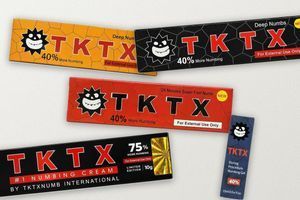
- Apply a thick layer on top and don't rub it in. TKTX specifies an exact thickness: 3–6 mm.
- Cover with film. Depain is strict about this: seal tightly with an occlusive polyethylene dressing. F&E advises leaving the film on until you feel numbness.
- Hold for the time specified for that particular product (see the table below).
- Remove the film and wipe off the residue with a dry wipe, let the skin air dry.
- Start the procedure.
Why anesthetic is covered with film
Film (occlusion) isn't a formality, it's part of how the numbing actually works. It keeps the product and heat against the skin, stops the formula from drying out and helps it penetrate deeper. That's why manufacturers spell out occlusion in their instructions: Depain calls for a tight occlusive dressing, and TKTX states outright that for the best result the treated area should be covered with film for 50 minutes to an hour. Without film, the cream partially evaporates and rubs off, and the effect comes out weaker and shorter.
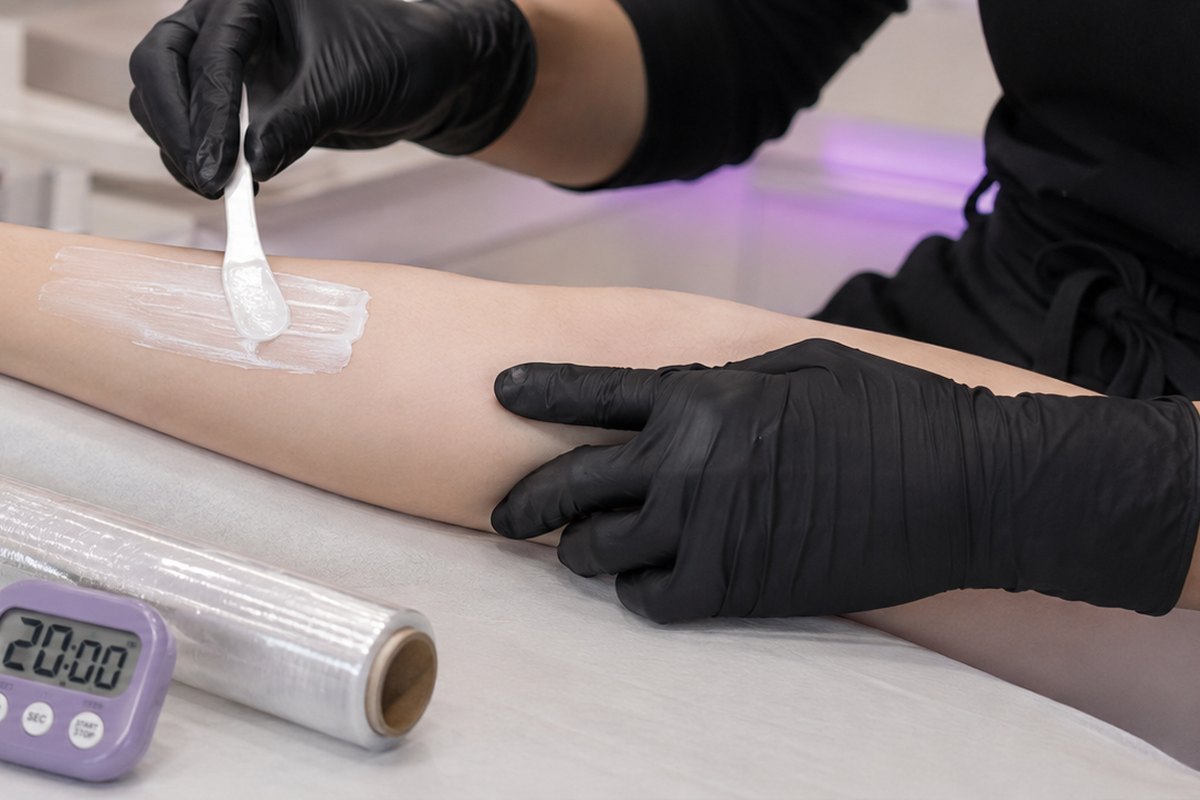
How long to leave numbing cream under film, and how long it lasts
How long to leave numbing cream on depends on the product, there's no single time that fits all. Here are real numbers from official manufacturer instructions, including TKTX, A-CAINE and B-CAINE:
| Product | Hold under film | How long it lasts |
|---|---|---|
| PM Cream | 10–15 minutes | on label |
| F&E Tattooist Red 7% | 15–20 minutes | on label |
| TKTX 40 | 25–60 minutes (film 50–60) | 1.5–3 hours |
| Depain | 30–60 minutes | on label |
| A-CAINE 10.95% | under film | 40–50 minutes |
| B-CAINE 11.5% | under film | 90–120 minutes |
The rule of thumb is simple: the more sensitive the client, the closer you go to the upper end of the range. TKTX puts it plainly: 25 minutes to an hour depending on skin sensitivity. There's no point holding it longer than instructed, always check the exact time on the product page.
How to apply secondary gel anesthetic
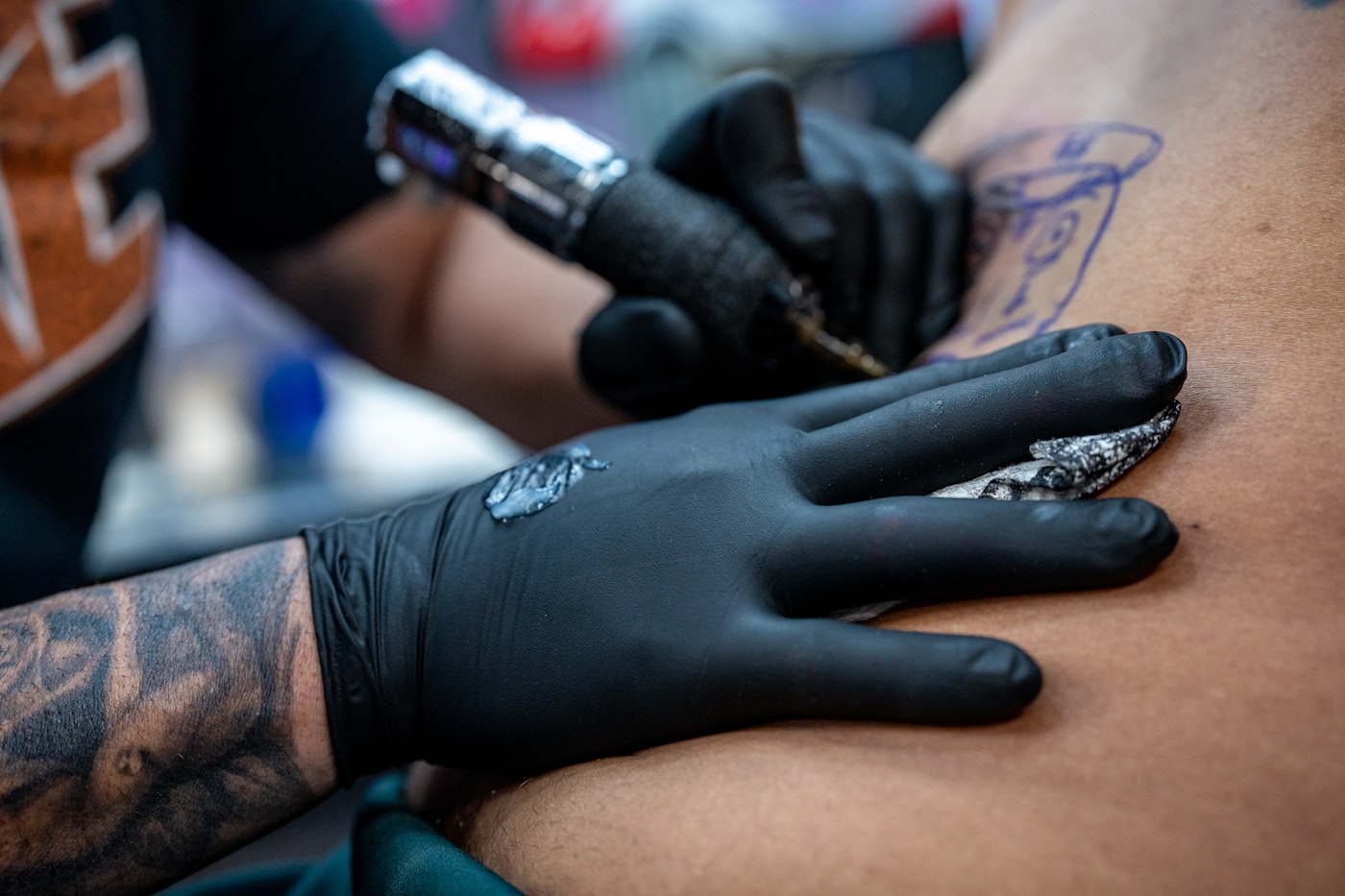
Secondary gel anesthetic is a different tool with different rules. It goes on during the work, on broken skin, not ahead of time.
- Only on broken skin. Sustaine states directly: apply moderately to damaged skin, on intact skin the product is ineffective.
- Moderate amount, don't flood the area. The gel works fast: with Sustaine the effect kicks in in about 30 seconds.
- Wipe off excess before continuing work, otherwise the gel gets in the way of the pigment.
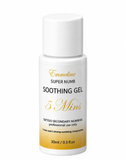
- Don't exceed the frequency. Emmeline Super Numb: do not use on the same area more than 3–5 times a day.
Anesthetic for the eyelids and eye area
The technique here is separate. Eye Anesthetic Cream's instructions call for cleaning the eyelid with a disinfectant made for mucous membranes, placing a piece of cotton pad under the eyelid and keeping the anesthetic from contacting the eye. Regular creams aren't suitable for this area.
Why numbing cream doesn't work
If there's no numbing, or it's weak, it's almost always about application, not the product. Check against this list:
- Worked without film. Primary numbing cream without occlusion partially evaporates and rubs off, so the effect comes out weaker and shorter.
- The layer was too thin. The top layer should go on thick and not be rubbed in: TKTX specifies 3–6 mm.
- Removed it too early. Every product needs its own hold time, from 10–15 minutes for PM Cream to an hour for TKTX.
- Applied secondary gel to intact skin. It doesn't work that way: Sustaine states directly that the product is ineffective on intact skin.
- The skin was damp or oily. Instructions require washing and drying the area before application.
- Didn't wipe off the residue before starting, so it gets in the way of the pigment.
Sensitivity test and contraindications
- Sensitivity test before first use. Sustaine, Emmeline and TKTX Gel all require this.
- For professional external use only. TKTX Gel specifically states: for licensed professionals only.
- Pregnancy and breastfeeding are listed as contraindications for several products (Emmeline, PRO-CAINE).
- Don't exceed the frequency or time specified for that particular product.
If you're still choosing a product, check our other breakdowns: the full guide to choosing an anesthetic, what the percentages mean, primary or secondary and which anesthetic for which procedure.
Work by the product's instructions, not by guesswork
In the It's Beauty catalog, every anesthetic lists its formula, method of application and time. Primary, secondary, hemostatics, more than 40 items in stock.
Go to the anesthetics catalogFrequently asked questions
Do you have to cover numbing cream with film?
How long should numbing cream stay under film?
What layer should numbing cream be applied in?
Why doesn't numbing cream work?
Why didn't secondary gel work?
How long does the numbing last?
Is a sensitivity test necessary?
- Hold times, layer thickness and duration are given per official manufacturer instructions and labels from the catalog. Each product has its own values, check exact data on the product page.
- This material is for informational purposes and does not replace a specialist consultation. All products are for professional external use.